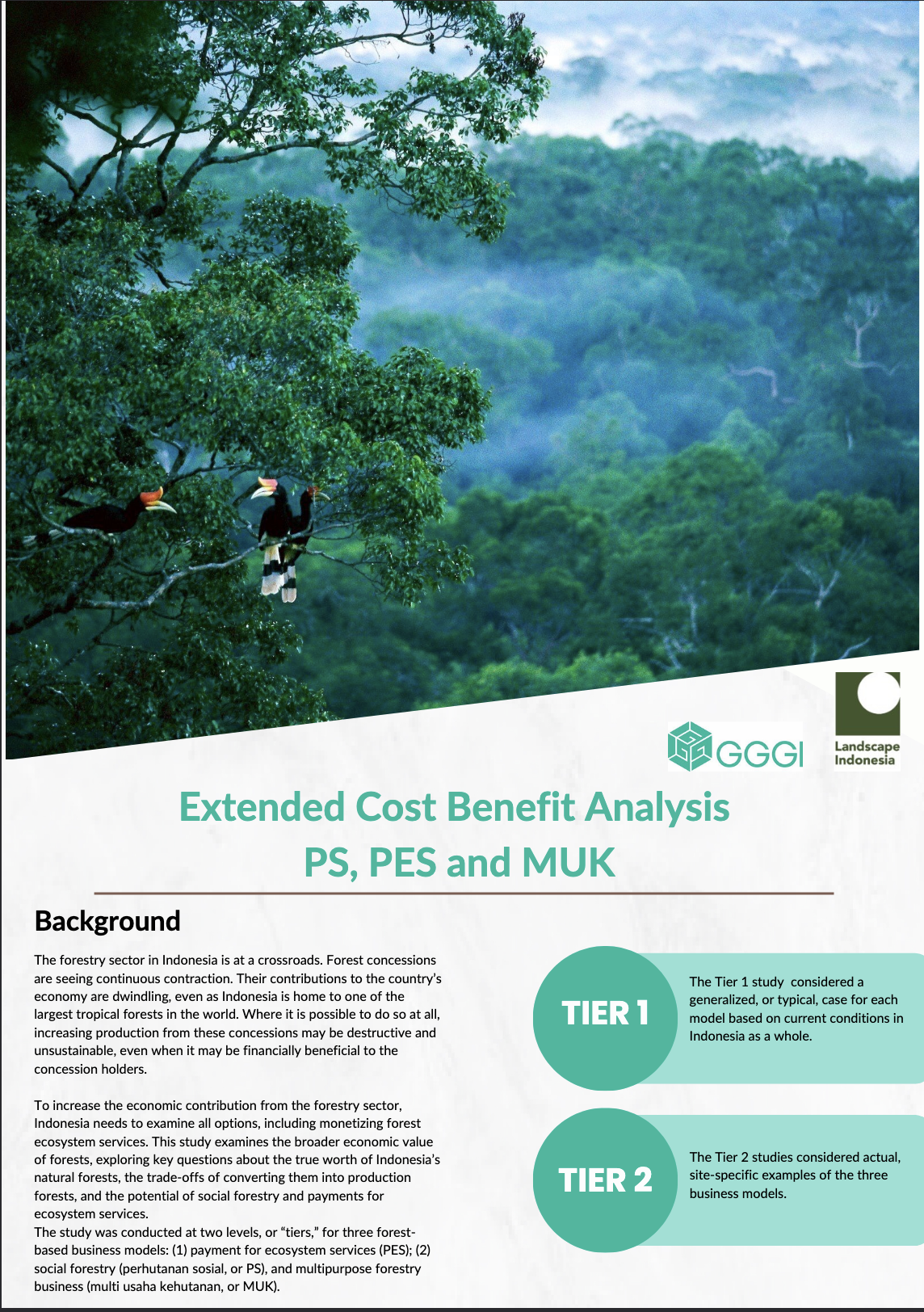
The forestry sector in Indonesia is at a crossroads. Forest concessions are experiencing continuous contraction, and their contributions to the country’s economy are diminishing, even though Indonesia is home to one of the largest tropical forests in the world. Where it is still possible to increase production from these concessions, such efforts may prove destructive and unsustainable, even if they are financially beneficial to the concession holders.
To enhance the economic contribution of the forestry sector, Indonesia needs to explore all possible options, including the monetization of forest ecosystem services. This study examines the broader economic value of forests, addressing key questions about the true worth of Indonesia’s natural forests, the trade-offs involved in converting them into production forests, and the potential of social forestry and payments for ecosystem services.
The study was conducted at two levels, or “tiers,” across three forest-based business models:
Multipurpose Forestry Business (Multi Usaha Kehutanan, or MUK)
Payment for Ecosystem Services (PES)
Social Forestry (Perhutanan Sosial, or PS)