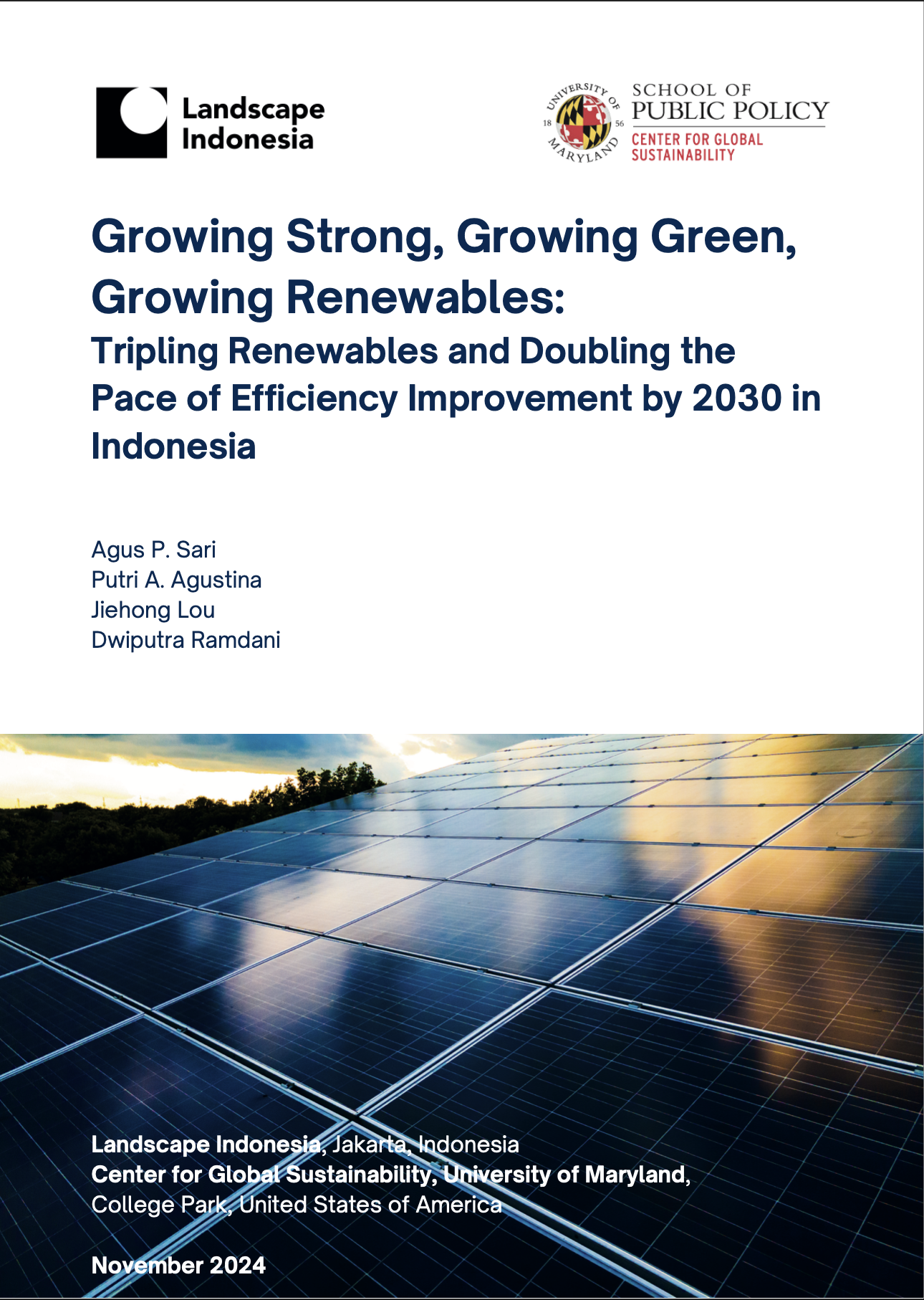
As climate change intensifies and global greenhouse gas emissions continue to rise, Indonesia faces considerable challenges in transitioning toward a sustainable energy system. At the COP28 summit in Dubai, 133 countries pledged to triple renewable energy capacity and double energy efficiency by 2030. However, Indonesia did not sign on to this global commitment.
Indonesia’s energy system remains highly carbon-intensive, with renewable energy sources vastly underutilized. To date, only about 1.9% of the nation’s abundant renewable energy potential has been harnessed. Although the 2021–2030 Electricity Supply Business Plan (RUPTL) outlines greater ambitions for renewable energy, it simultaneously includes plans for substantial coal expansion. This dual strategy risks locking Indonesia into a high-emissions trajectory, potentially offsetting gains from renewable energy deployment.
The country continues to face difficulties in aligning its long-term energy transition goals with near-term implementation targets. Despite efforts to scale up renewable energy, progress is constrained by the ongoing expansion of coal-fired power generation, which undermines national decarbonization objectives.
This report assesses Indonesia’s capacity to overcome these challenges and achieve its energy transition targets within its distinct economic, energy, and social contexts. The analysis applies a system dynamics model originally developed by the Ministry of National Development Planning (Bappenas) under the Low-Carbon Development Initiative (LCDI) to explore potential transition pathways and policy implications.