Portrait — Prof. Jatna Supriyatna
Prof. Jatna Supriyatna
Commissioner
Bridging sustainable landscape management with financial resources.
The Landscape Group strives to bridge decarbonization with green financing — expanding renewable energy utilization, establishing nature-based solutions, realizing circular economy, and connecting them with innovative green financing. It is led by seasoned leaders in the carbon market with more than 25 years of experience each.
The Group works through three subsidiaries. Landscape Advisory sets the direction: strategic and technical advice on how a landscape should be planned and managed. Carbon Asset and Liability Management gives that direction a measurable value in carbon. Landscape Impact Financing for the Environment brings the capital that makes it happen.
The three are steps in one sequence as often as they are separate mandates. Advisory work establishes what a landscape needs and what balance of protection and production it can carry. Where that plan creates carbon value, the carbon practice develops and verifies it — and where it creates carbon exposure, the same practice manages it as a liability.
A plan that cannot be financed is not a plan. LIFE carries the group's work into capital: it assists and facilitates environmental and social entrepreneurs, and will eventually hold a Fund of its own. Carbon revenues, blended public and private sources, and commercial finance are what allow an advisory recommendation to become a project that lasts.
Strategic and technical advisory to governments, private sectors, and civil society organizations for sustainable landscape planning and management — integrating ecological priorities with financial and development strategies so that every intervention creates tangible benefits for both people and nature. Its working papers are published in the group's advisory series.
Design and implementation of carbon programs that contribute to national and global climate goals. Through measurable, verifiable, and transparent methodologies, it supports emission reduction, carbon offset, and ecosystem restoration — treating carbon as both an asset to be developed and a liability to be managed on the balance sheet.
LIFE assists and facilitates environmental and social entrepreneurs, bridging the gap between sustainability initiatives and long-term investment. Eventually the program will be equipped with a Fund to provide financial resources for environmental and social business.
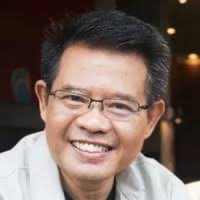
Formerly Deputy Minister and Deputy Chair of the Indonesian REDD+ Management Agency, in charge of planning and financing, after four years as member and Chair of the Funding Instrument Working Group of the Presidential Task Force on REDD+. He was Chief Executive Officer of Yayasan Belantara, a $50 million fund financing landscape conservation and restoration in Indonesia, and Country Director for Indonesia at Ecosecurities.
He co-chaired the UNFCCC Work Program on REDD+ Finance, was a Lead Author with the Intergovernmental Panel on Climate Change from 2001 to 2007, and lectures at the School of Business and Management, Bandung Institute of Technology. He holds an advanced degree from the Energy and Resources Group, University of California, Berkeley.
The climate crisis reaches Indonesia as an economic event: drought and fire in the dry years, floods and landslides in the wet ones, and a fiscal bill for both. Decarbonization is the work of cutting emissions across power, land use, and industry fast enough — and financing it in a way the economy can carry.
Landscape approach is an approach that spatially and participatorily strives to balance seemingly competing goals of protection and production. Its particular challenge is financing: the multiple goals require an innovative financing structure, in most cases unique for different landscapes.
A membership-based organization established by The Landscape Group to advocate common market interests among project developers — offering carbon credits from a diverse portfolio of assessed, high-integrity projects rather than from any single one.
About the Collective →Tracking Indonesia’s 2026 fire season as it happens — hotspot counts, where the fire falls inside the conservation estate, the health bill it is running up, and the modeled cost to the economy.
About the initiative →Reform work on Indonesia's power market, where reliability, affordability, equity and decarbonization increasingly collide — including transition credits for the early retirement of coal-fired plants and their replacement with renewables.
About the program →Recovery in Aceh, North and West Sumatera that rebuilds the catchment as well as the settlement — restored upper-catchment forest, riparian buffers and coastal vegetation specified and financed as flood infrastructure.
About the initiative →Achieving food and energy security while conserving and restoring forests, reducing deforestation, and achieving the 2030 FOLU Net Sink target — three commitments that compete for the same land unless they are planned against one map.
About the initiative →