What the program does
The program quantifies climate risk in economic terms, manages the carbon position that follows from it, and turns net zero commitments into sequenced, costed strategies.
Physical and transition risks reach governments and companies through the same channels — production, prices, budgets, and the cost of capital. The program measures those exposures, sets out reduction pathways against them, and identifies where carbon assets, markets, and disclosure regimes change the calculation. Its analysis is published in the Landscape 360 series.
Second Nationally Determined Contribution Support
Support for the development of Indonesia’s Second NDC and for turning its targets into projects that can be financed.
Corporate Climate Risk Management
A climate stress test for companies. It runs El Niño and La Nina scenarios and transition shocks through a firm's operations, supply chain and markets, and puts the result in revenue, cost and cash-flow terms, together with the adaptation measures that reduce it.
Decarbonization and Climate Resilience in the Heavy Industries Sector
A teaching program at STEMBA SBM ITB on financing the decarbonization of heavy industries.
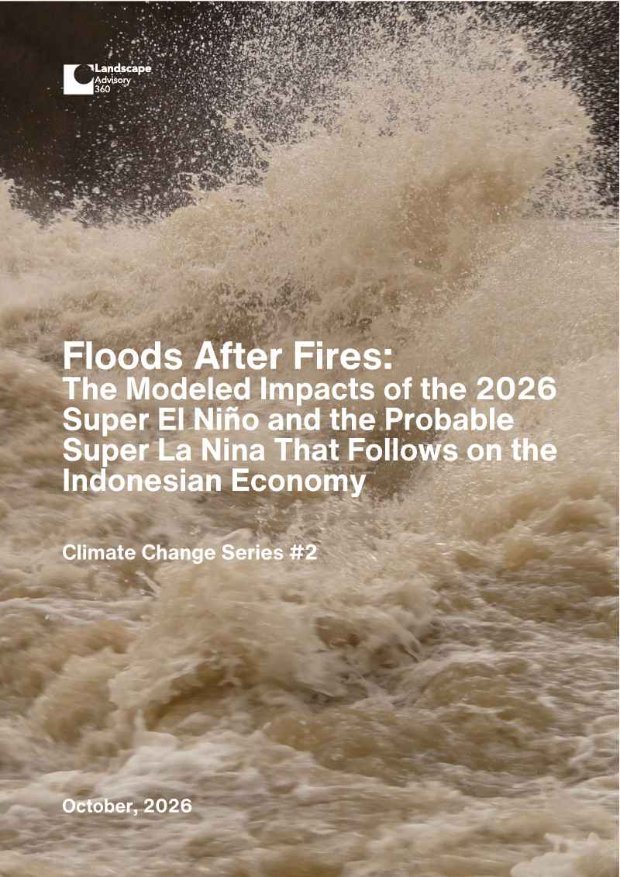
Floods After Fires
The modeled impacts of the 2026 super El Niño and the probable super La Nina that follows on the Indonesian economy. Net damage over the two years reaches 3.5 to 7.1 percent of GDP, and damage in the dry year raises damage in the wet year.
Read the paper →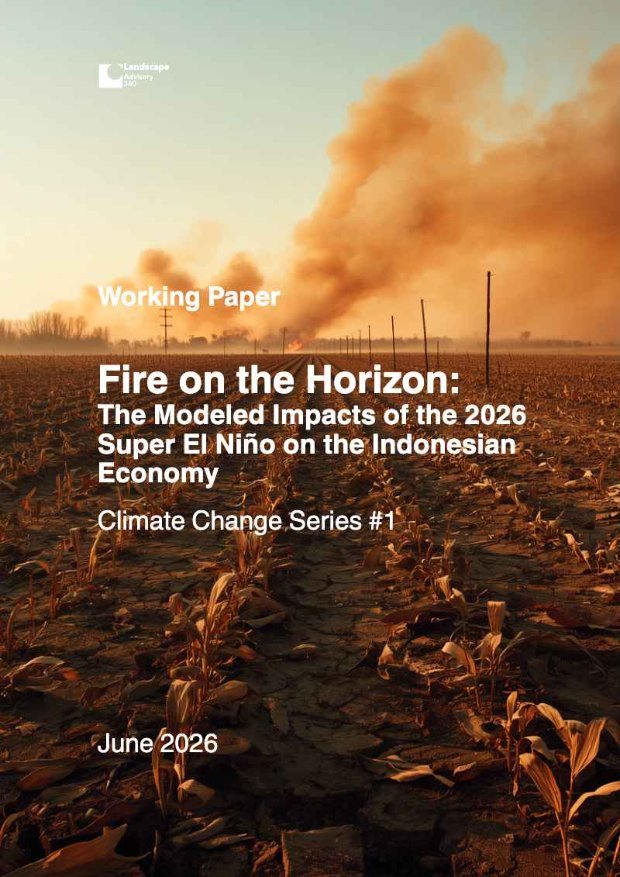
Fire on the Horizon
The modeled impacts of the 2026 super El Niño on the Indonesian economy — the indirect wave costs more than the scorched fields.
Read in Landscape 360 →